

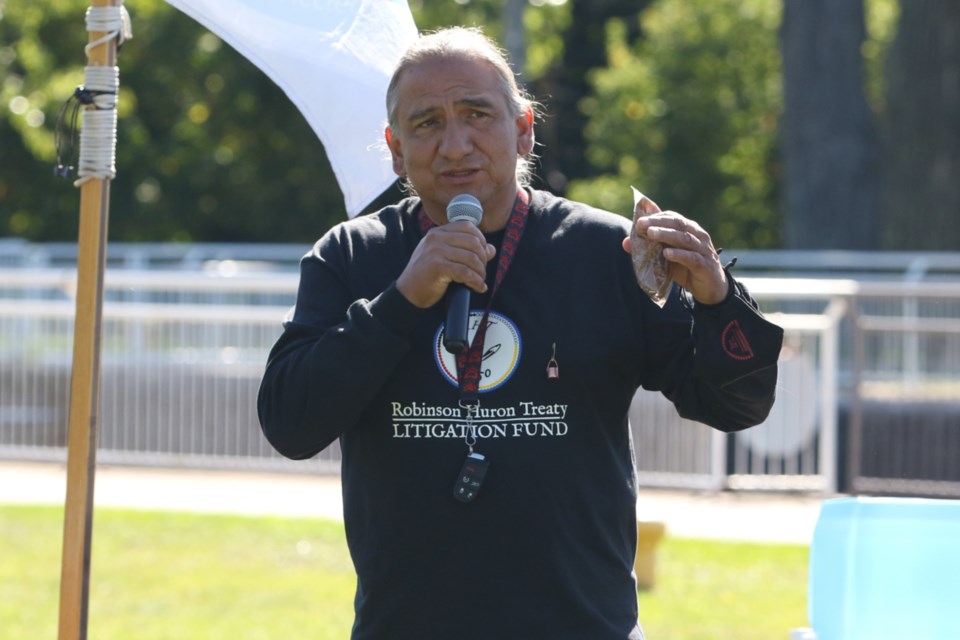
Chiefs in Robinson Huron Treaty territory are calling for the immediate withdrawal of Bill C-5, which gives the federal government broad powers to fast-track major development and infrastructure projects.
That message comes after a delegation of Robinson Huron Treaty Chiefs and representatives attended a summit in Gatineau, Que. Friday, where Prime Minister Mark Carney was greeted with protests and walkouts during a scheduled meeting with hundreds of First Nations chiefs.
The controversial bill has faced widespread opposition since becoming law last month, with First Nations leadership fearing it would weaken environmental protections and limit First Nations rights to consultation and consent for major infrastructure projects.
“As the agenda unfolded, it became clear this wasn’t about true partnership. It was about legitimizing decisions already made,” said Dean Sayers, spokesperson for the Robinson Huron Treaty Chiefs and member of the Robinson Huron Waawiindamaagewin (RHW) Political Working Group in a news release issued today.
“Bill C-5 is an attempt to validate Canada’s theft of our resources. You cannot engage us after the legislation is passed. That is not consultation — that is colonization dressed in policy language.”
Chiefs in the territory remain steadfast in their commitment to uphold and defend the Robinson Huron Treaty Declaration, which reaffirms:
- The inherent responsibilities and jurisdiction given by the Gichimanidoo (Creator) over the land (Kidaklimnaan) and all within it;
- The right to self-determination (Debendiziwin), which cannot be altered or taken away by any foreign government or colonial institution;
- The existence of legitimate Anishinaabe governance over their lands, communities, and resources since time immemorial — long before contact with colonizers.
“We are open for business — but it must be on our terms, through our processes, and with our permission. The Robinson Huron Treaty is a living agreement,” said Anishinabek Nation Lake Huron Regional Chief Scott McLeod in the release.
The Anishinabek Nation issued a release of its own today, advising the Crown of its commitment to work collaboratively with government, industry and other stakeholders to ensure that critical minerals extraction is conducted in a responsible and sustainable manner that respects Indigenous rights.
But the political advocate for 39 First Nations in Ontario also warned it won’t hesitate to use all available means at its disposal — including legal challenges — to protect treaty rights and defend inherent rights to lands and resources.
“We call upon the Crown (Canada and Ontario) to recognize and respect our rights, engage with us in good faith, and work with us to build a future where resource development and our inherent and treaty rights can coexist in a spirit of mutual respect and understanding,” said Anishinabek Nation Grand Council Chief Linda Debassige.
Earlier this week, The Canadian Press reported that nine First Nations in Ontario have launched a legal challenge against Bill C-5 and Ontario's Bill 5 —provincial legislation aimed at fast-tracking development and infrastructure projects — in an effort to have both bills declared unconstitutional in Ontario Superior Court.
Chiefs in Robinson Huron Treaty territory expressed concern over the structure of yesterday’s summit meeting, where more than 600 First Nations leaders were forced to compete for speaking time, which they felt watered down the voices of those with “legitimate and pressing concerns.”
“It’s unacceptable,” said McLeod. “First Nations leadership should not have to fight for a microphone to be heard by the Crown’s representative. The Prime Minister must sit down with the Robinson Huron Treaty leadership directly and immediately.
“We need to chart a path forward that is based on mutual respect, true partnership and the full recognition of our rights and authority.”
SooToday has reached out to the Prime Minister’s Office and Sault Ste. Marie-Algoma MP Terry Sheehan for comment.
- with files from The Canadian Press