
Prime Minister Mark Carney isn’t revealing his list of ‘nation-building’ mega-projects until Nov. 13, but Premier Doug Ford and Energy and Mines Minister Stephen Lecce are already cheerleading that Canada Nickel’s Crawford mine project is making the grade.
Both acknowledged multiple national media reports that the proposed Timmins-area open-pit mine and mill proposal is likely included in the second round of Ottawa’s major national interest projects, a nation-builder type of development that will jumpstart Canada’s economy.
In speaking to reporters at a Nov. 12 press conference in Eastern Ontario, Lecce mentioned that Crawford was on the premier’s submitted list to the federal Major Projects Office. The agency was established to streamline the regulatory approvals process and eliminate Unnecessary duplication between the feds and the provinces.
Both Ford and Lecce were in Edwardsburgh Cardinal to view the construction of the Skyview 2 Battery Energy Storage System, reputed to be the largest such facility in Canada.
During a media question and answer session, Ford and Lecce said they expect the Carney government to deliver on its promise to work with the provinces to fast-track development of large-scale natural resource and infrastructure projects across Canada.
“It’s great that they’re doing the Crawford nickel project,” Ford said, “but let’s get out of our way on everything else. Let’s get out of our way when it comes to the Ring of Fire, make sure we have one project, one process until we don’t have duplication from the federal government.”
The Ford government launched its own such mine project fast-tracking process last month.
Lecce maintains projects like Crawford will reduce China’s dominance in the global nickel space. Indonesia, he said, produces half of the world’s nickel with China owning 75 per cent of those mines in the Asian-Pacific country.
“We have to disrupt their stranglehold of the supply chain.”
In referencing Crawford: “We’ve got the highest grade nickel, a business operation that represents 1,000 permanent jobs, 3,000 construction jobs, a 40-year operation with billions of dollars of gain to Canada’s economy. We certainly hope it will be prioritized on that list."
Actually, Crawford is not a high-grade nickel project, but is a low-grade mine. It's rated as the world's second largest nickel reserve.
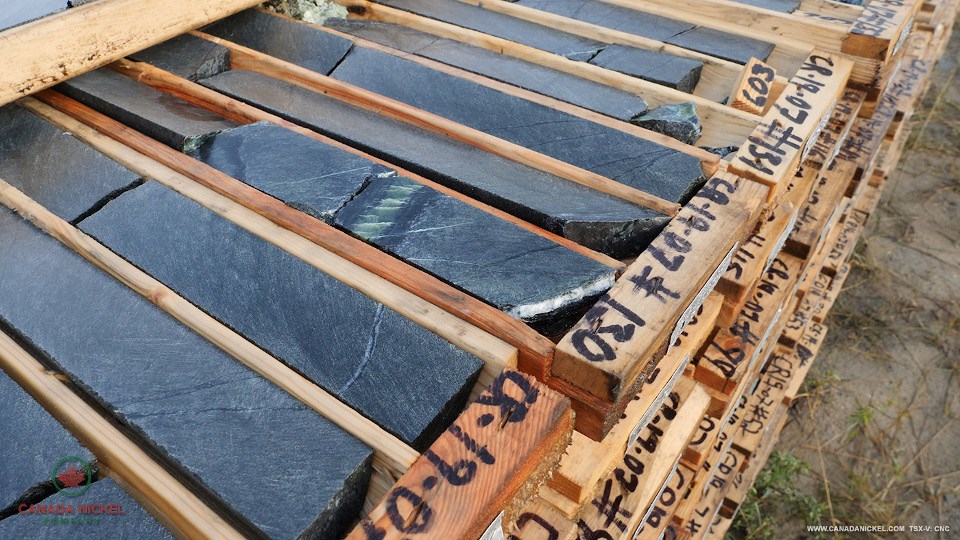
The average grade of Crawford over its projected 41-year mine life is 0.22 per cent nickel with higher grades zone in that deposit that grades exceeding 0.30 per cent.
At 9.7 million tonnes of measured, indicated and inferred resources, it’s considered a big-tonnage project with a significant resource base.
Canada Nickel hasn’t made a construction decision for the $2-billion project. The Toronto company is still waiting to pocket a key federal permit sometime this fall.
Located 40 kilometres north of Timmins, its economic impact stands to be substantial, according to the company. And the project mechanics offer a lot for Ottawa to like.
Crawford is being designed as a low-carbon emitting pit project that will employ carbon capture and carbon sequestration technology. Besides offering a massive amount of much-desired critical minerals, with room to grow, Canada Nickel also has a committed First Nation partner on board.
Ford expects more discussions with the Carney government to draw out investments in large-scale nuclear projects, the Ring of Fire, and his pet project to bore a tunnel under Highway 401 to relieve traffic congestion in Toronto.
On the Ring of Fire, Lecce reminded Ottawa that Ontario is already running an Indigenous-led environmental assessment in the area.
“If we want to do big things and move at the speed in a post-Trump world, we have to end the duplication between governments.”
Ottawa is not running, nor has it called for, a federal environmental assessment (EA) on any proposed mining project in the Ring of Fire. But it is running a Regional Assessment, a new process that was initiated by former Natural Resources Minister Jonathan Wilkinson in February 2020. Though it’s moved at a glacial pace, the data gathered from this process will only be used to inform a federal EA, should one be called.