
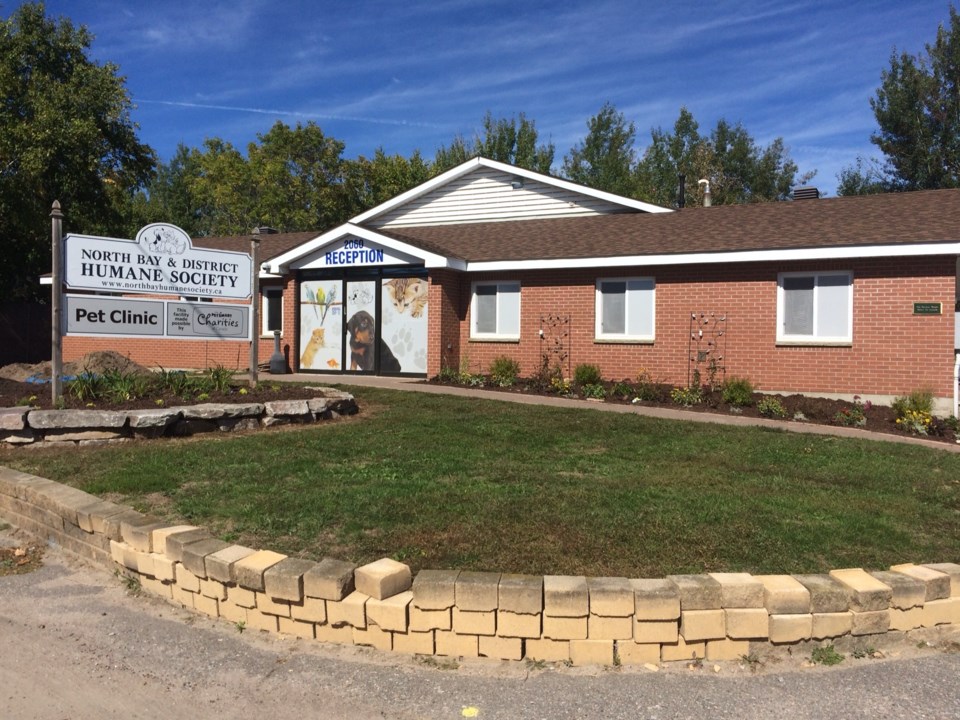
The North Bay and District Humane Society has temporarily suspended stray dog intakes after a recent animal transport from Thunder Bay raised concerns about potential exposure to canine parvovirus.
On Monday, the shelter welcomed 20 puppies as part of its regular transfer program. Shortly after, the organization was notified that one dog left behind in Thunder Bay had tested positive for the virus.
“Out of an abundance of caution for the vulnerable animals in our care, Stray Dog Intakes will be suspended until further notice,” the Humane Society said in a public release on social media. “Stray cat intakes are still accepted.”
Canine parvovirus can spread fast. The shelter says the move is temporary but necessary to protect animals already in their care.
Liam Cullin, executive director of the Humane Society, says animal transfers like this are a routine part of their work.
“Every year we work with partners all over the province on transferring animals in and out of the shelter,” Cullin explained to BayToday.
“Lots of times we’re taking animals from northern communities where there’s less access to veterinary care and bring them to North Bay, specifically because our Humane Society has the capacity to be able to adopt them.”
Cullin said the organization’s animal hospital plays a key role in preparing dogs for adoption.
“We do spay and neuter surgeries. We vaccinate them. We get them ready for adoption. We either adopt them here or transfer them down south to places with larger populations where they have a chance for adoption,” he said. “For example, last year we transferred in 177 dogs from other communities.”
This recent transfer was supposed to include 21 dogs, but one was held back after showing signs of illness, says Cullin. The shelter later learned that dog tested positive for parvovirus.
“As a result, the remaining dogs that were on their way to North Bay were exposed,” Cullin said.
“None of them have tested positive, but it’s just an exposure at this point. So out of an abundance of caution, we’re trying to quarantine the dogs here until such time that they’ve all cleared their medical exams.”
Cullin says the incubation period for parvovirus is usually three to seven days.
“We’ll have a clearer picture sometime, probably by the end of next week,” he said.
“Right now, we’re estimating it’s probably going to be about 20 days that we’re putting the animals here into quarantine and not bringing any new animals in unless we know their vaccination status … that's an important thing to note is if the dogs are double vaccinated, then they are likely protected … because a lot of the strays that are coming in, we don't know the vaccination status.”
While stray dog intakes are paused, the Humane Society is still helping the public find alternatives.
“It’s not necessarily a hard ‘no,’ it’s ‘here’s other options,’” Cullin said.
“There’s places like Buster’s page on Facebook—they have a large social media presence that they use to be able to reunite dogs with their families. We’re asking the public to make sure they’re checking Buster’s page for options … people are still encouraged to contact the Humane Society, and we’ll provide options.”
While the situation is unfortunate, says Cullin, it’s not unfamiliar.
See: Temporary halt of Humane Society services continues due to virus
“I don’t want to say it’s normal or typical,” he said. “We did have another parvovirus outbreak earlier this spring. We had a couple of them last year. We had one in 2023. So unfortunately, it does happen.”
He added that in an average week, the shelter brings in about four stray dogs.
“It’s an unfortunate situation, but not one that we’re not familiar with,” he said.
The Humane Society is reminding the public that the best protection against parvovirus is regular vaccination.