

This week’s 2025 budget re-adoption saw Greater Sudbury city council members approve numerous changes to service levels.
Between such things as following through on a sustainable waste strategy, adopting a long-proposed mattress diversion program and accelerating the timeline to close three fire halls, much was changed.
These are in addition to 2025 budget decisions already made during the city’s first multi-year budget cycle, which began in 2023, with this week’s meeting representing a budget re-adoption.
As reported earlier this week, the city’s 2025 budget re-adoption concluded on Tuesday with city council shaving the originally proposed 7.3-per-cent tax levy increase down to 4.8-per cent.
Plus, a 4.8-per-cent increase to water/wastewater rates.
The following is a rundown of what took place during this week’s deliberations.
Digitizing records at Tom Davies Square
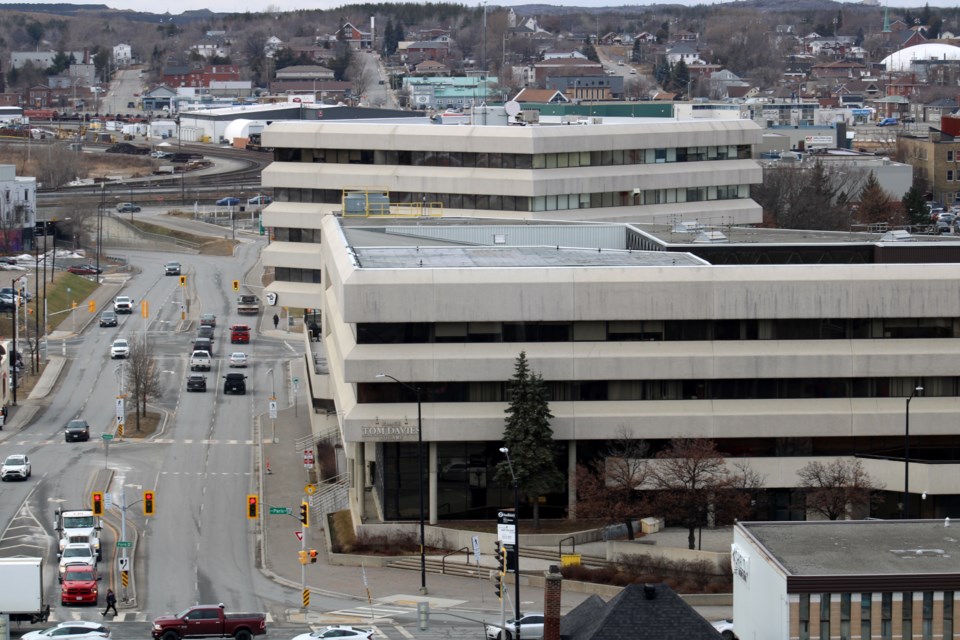
The City of Greater Sudbury has been cleared to implement a wide-reaching effort to digitize municipal records in advance of the Cultural Hub at Tom Davies Square project.
The library/art gallery will see various municipal services shift from 200 Brady St. to the upper floors of 199 Larch St., where they’d have to relocate their paper records.
“Right now is a good time to do this since service areas are motivated to make improvements as we move to 199 Larch,” city Information Technology director Peter Taylor told city council members earlier this week.
Rather than physical copies, the city will work to store documents in cloud storage through Microsoft 365 infrastructure.
The effort will require two full-time equivalent positions for two to four years, but frees up four full-time equivalent positions once the new system is fully operational.
By digitizing data, it will also be freed up for use with future artificial intelligence programs to help with automation.
If placed in standard four-foot wide cabinets five feet tall, with enough space to open them, Taylor estimated the paperwork the city needs to retain would fill 10,000 square feet of space, which is almost one full floor of 199 Larch St.
Associated costs are $1.4 million between 2025-27, followed by annual savings of $59,556. The net 2025 tax-levy impact was reduced from the initially proposed $553,790 to $252,952 by drawing from reserves.
Implement sustainable waste strategies
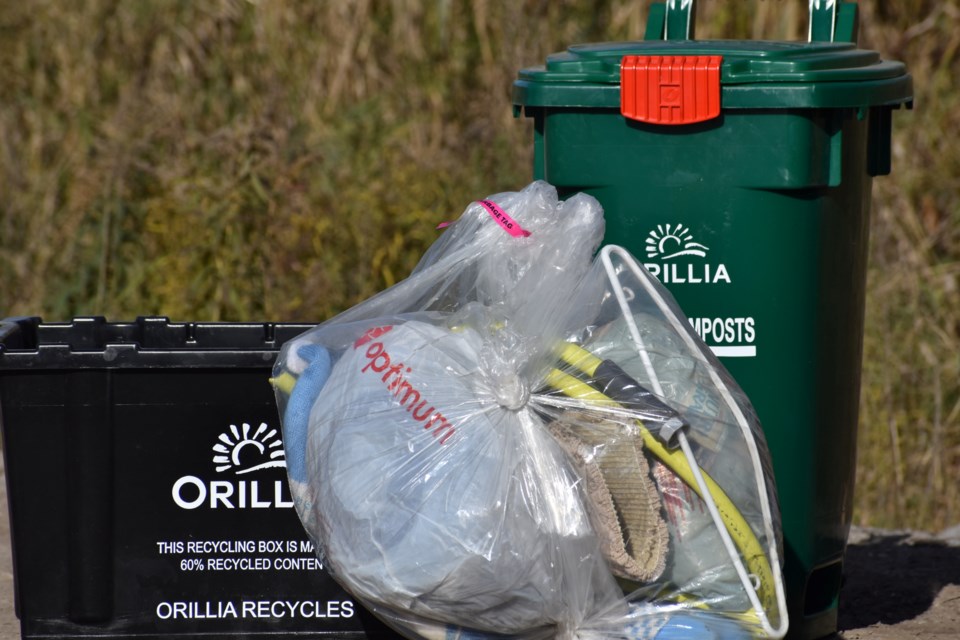
The city will proceed with its Sustainable Waste Strategy.
The much-contested proposed clear garbage bag mandate (one of 18 recommendations in the strategy) has been deferred to the end of 2026, when staff will return with a report on the recommendation.
Much of the implementation thus far consists of studies, which drew the ire of Ward 4 Coun. Pauline Fortin, who argued against spending money on more studies.
City Environmental Services director Renee Brownlee said the studies “are going to help us make service level adjustments that are going to align with our sustainable waste strategy,” and that their timelines align with upcoming collection and landfill contracts.
“That’s why the timing of these studies are all upfront,” she said. “It sets that path forward for the following years.”
Rather than increase the 2025 budget by $432,000 as initially proposed to help pay for these efforts, (a 0.12-per-cent levy increase), city council members decided to draw $382,000 from reserves, bringing the levy impact down to $50,000.
Mattress diversion program

A long-discussed mattress diversion program has been adopted, with its annual cost of $475,000 slated to be funded by a decrease in blue box costs associated with an upcoming producer-pay model the province is implementing across the province.
The city currently processes 11,000 mattresses and box springs annually, and trucking them outside of Greater Sudbury for recycling is expected to extend the life of the city’s landfill sites by three years.
In 2025 alone, the gross cost of landfill space occupied by mattresses is approximately $827,798. Minus nine months of mattress diversion operations in 2025 ($356,250), the net savings is $403,778 (albeit, not reflected in the tax levy as yet, with the real cost coming when the city has to replace its landfill sites).
Replacing the city’s existing landfill sites has been estimated at $200 million, though city Growth and Infrastructure manager Tony Cecutti cautioned that the city would be lucky to get a landfill approved at all in a couple of decades, and that the city might even end up having to truck garbage out of the municipality at a much greater cost.
City landfill sites have an estimated remaining lifespan of 25 years. Longer, if measures are taken to divert waste.
“The goal is to get rid of as much stuff from your landfill as soon as possible because it will just come back to haunt you,” Cecutti said.
In 25 years, Mayor Paul Lefebvre said city council members will be debating which ward gets a new dump, which he noted is not something residents will support.
Other 2025 budget highlights
As previously reported, the city will also accelerate the closure of three fire halls, which will shutter by the end of the year and amalgamate with neighbouring halls. Affected stations include those in Copper Cliff, Val Caron and Falconbridge.
The city will hire two part-time municipal law-enforcement officers to ride city buses to enforce rules, including fares.
Public Health Sudbury and Districts’ budget was presented, revealing cuts to public beach inspections and various other services.
Almost $8 million in work on Elgin Street, from Elm Street to the Brady Street underpass, was approved, including the installation of bike lanes, and $4.8 million in work to the Tom Davies Square exterior facing Paris Street was OK’d, including accessibility components like ramps.
Some other expenditures include:
- An annual grant of $16,000 for Onaping Falls Recreation Committee so they have reliable annual funding.
- Adding a cybersecurity analyst to the city’s team and a system in place to “autonomously detect and proactively stop breaches at the device level,” affecting 7,200 connected devices. An analyst would be hired on July 1, 2025, and the annual software licensing fees will be $151,000. A full year’s salary and benefits will be $124,508. “It is extremely expensive to recover” from a cyber attack, Ward 2 Coun. Eric Benoit cautioned city council. “If we wait until after it happens to us, it could be catastrophic."
- A new columbarium wall will be installed at Civic Memorial Cemetery, which is a cost-recovered effort costing $325,000 and netting $440,725 in revenue.
- A full-time transit electronic technician will be created by converting available part-time hours into a full-time position, at a cost of $17,799. They’ll take care of such things as public transit surveillance cameras, fare boxes, next stop/call-out system and patron counters.
What didn’t come up?
Although various business cases were tabled for city council consideration, including those proposed by city council members and by city staff, only those championed by members were discussed.
Two business cases were neither discussed nor deferred to 2026 budget deliberations, so effectively died for the time being.
(That said, they can still come up again, as the $5 gate fee at city landfill sites showed. The gate fee was proposed as a business case in 2023, wasn’t adopted or deferred by city council, and was then found baked into this year’s budget as a revenue generator to help lower the tax levy without coming up again as a business case. Ward 5 Coun. Mike Parent and Ward 7 Coun. Natalie Labbée were publicly critical of the gate fee’s reintroduction, and city integrity commissioner David Boghosian said it should have been re-introduced as a business case.)
One business case which failed to receive a champion was a staff-led proposal to close the Levack arena at a full-year’s savings of $337,828, plus whatever capital work comes up, including $580,000 in budgeted but unspent projects.
The other business case city council members didn’t pick up would have created a climate resilience officer senior contract position to help keep the city on track with its environmental goals. This position would have come at a cost of $164,948 in 2025.
Several proposed business cases were deferred to the 2026 budget process, including:
- Proceed with phase 2 of MR 55 Lorne Street infrastructure renewal
- This project consists of the renewal and rehabilitation of the corridor from Elm Street southwest to Power Street, minus a recently improved section between Logan Avenue and Martindale Road. Its total cost is $21.8 million.
- Install two road weather information stations
- This would provide real-time information on road conditions, including atmospheric and pavement temperature, wind information, rain and snow accumulation as well as live video. The city currently has two (at Onaping River bridge in Levack and Vermillion River bridge in Whitefish), with this expenditure slated to double their collection by adding cameras to the Valley/Capreol area and Nickel Centre area. The one-time cost is $250,000, and its annual cost is $5,000.
- Expand Community Homelessness Prevention Initiative guidelines
- This $200,000 annual budget boost would help pay rents through the Community Homelessness Prevention Initiative, since the budget has not kept up with rising rent costs. The initiative’s current 2024/25 budget is approximately $930,000.
- Create an Outdoor Sports Court at O'Connor Playground
- A 6,784-square-foot asphalt sports court would cost $280,000.
- Eliminate Driveway Entrance Culvert Subsidy.
- Eliminating this subsidy would shave approximately $170,000 from the budget.
What’s next?
In spring 2025, city council members will decide how that year’s tax-levy jump of 4.8 per cent affects individual tax rates.
As this year’s tax plan showed, the 5.9-per-cent overall municipal tax levy hike approved during 2024 budget deliberations translated to a 5.4-per-cent overall residential hike, a 4.7-per-cent commercial tax jump and a 3.4-per-cent increase for industrial properties.
Tyler Clarke covers city hall and political affairs for Sudbury.com.